Rejected by TechNation Exceptional Talent and looking for advice

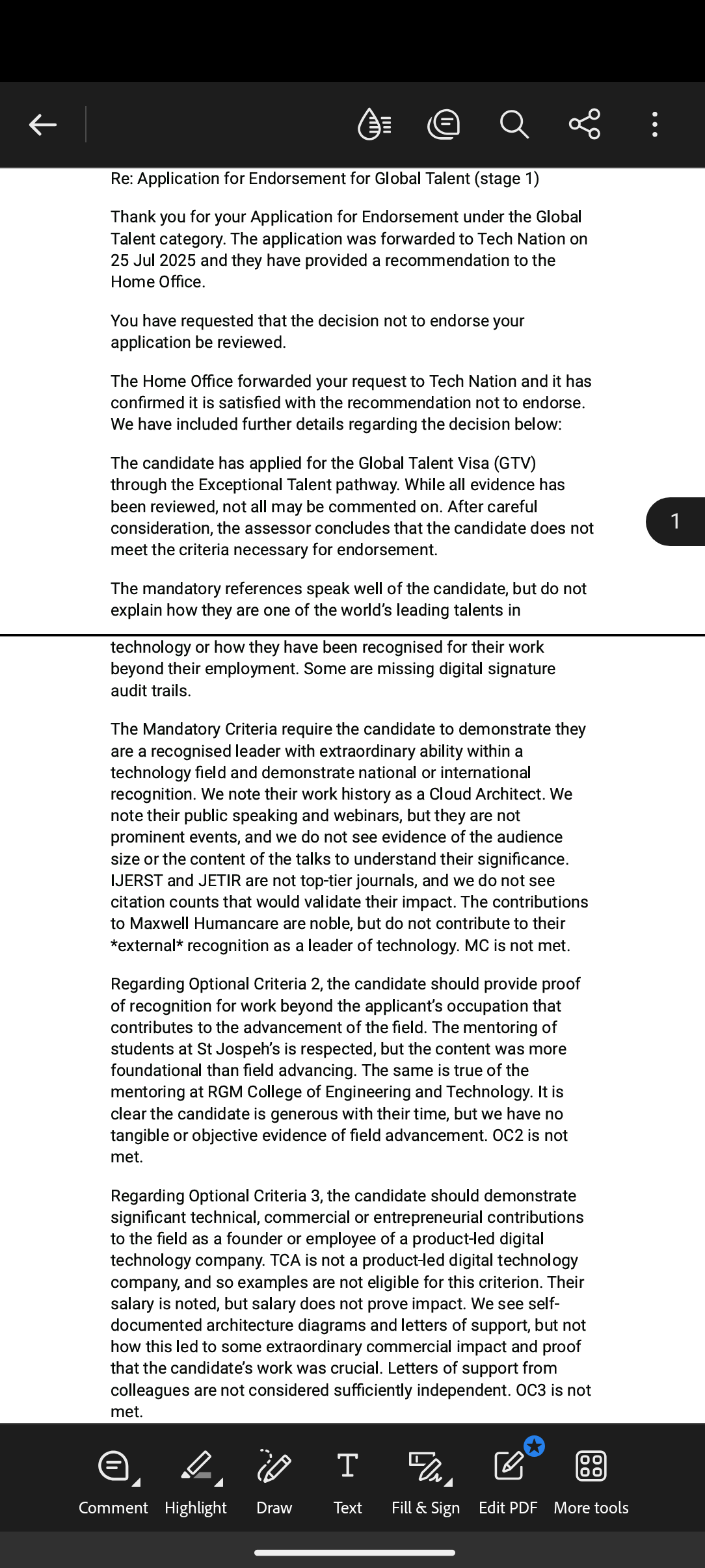
Hi everyone, I received a rejection for my Global Talent Visa (Tech Nation) endorsement, and I’m preparing for a possible re-application. I’d appreciate your advice on the following points where Tech Nation raised concerns:

I have over 9yrs of experience and worked for Cloud , AI technology.

Mandatory Criteria (MC):

  1. My experience was considered “service-based” and not product-led. How can I strengthen my evidence here? Is contributing to product-based companies (even voluntary/no cost work) acceptable?

  2. I had panel speaking sessions and webinars, but they said these were not impactful enough. What type of speaking engagements are usually accepted? Do I need to show conference size, official invites, or media coverage?

  3. My published papers (IJERST, JETIR) were considered low-tier. Are IEEE/ACM/Scopus-indexed journals necessary, or can patents, open-source, or industry recognition substitute as strong evidence?

Optional Criteria 2 (OC2 – Mentorship):
5. I submitted mentorship evidence from two colleges (degree + engineering), including university nomination letters, long-term mentoring proof, newspaper articles, and letters. But they said this is not “field advancing.” What type of mentorship is usually considered strong enough (e.g., accelerator programs, global mentorship platforms, or proof of mentees’ success)?

Optional Criteria 3 (OC3 – Product-led Contributions):
6. They rejected my evidence because it was from a service-based company and said it lacked proof of individual impact. Can I use past or volunteer work for a product-led company instead of only my current employer?
How ever i shown architecture diagram , letter ,mail evidence.

  1. What is the best way to prove my impact? Do architecture diagrams, metrics (growth %, adoption), and independent letters of support from senior leaders outside my company make a stronger case?

  2. What is the best way to take the sign from referee it should always like docusign ? Because in few of my letters referee directly signed on paper and sent to me over email.
Waiting for your valuable guidance and advice to improve my profile.

1 Like

Sorry to hear that. When did you apply and when they responded?

I have applied on July 23rd, they responded on Aug 04.

1. Service-based vs Product-led Experience

Your service-based work won’t qualify for mandatory criteria. Tech Nation wants evidence of building actual products that users interact with directly. Contributing to product-based companies voluntarily is acceptable and often necessary. I’ve seen applicants succeed by contributing to open-source projects or doing unpaid work for startups to build this evidence. Document your role in creating user-facing features rather than backend services.

2. Speaking Engagements Impact

Panel sessions and webinars are considered weak evidence. You need speaking roles at major conferences with 100+ attendees. Include invitation letters from organizers, photos showing large audiences, and evidence of media coverage or social media engagement from your talks. DevFest events can work if you prove significant audience size and show how your presentation advanced the field rather than just shared information.

3. Publications Quality

You don’t need IEEE or ACM specifically, but you need evidence of significant readership and impact. Patents can substitute if they show innovation. Open-source contributions with high adoption rates work well. Industry recognition like being featured in major tech publications or having your work cited by other experts carries more weight than journal tier.

4. Architecture Diagrams and Individual Impact

Architecture diagrams alone don’t prove impact. You need metrics showing user adoption, performance improvements, or revenue growth directly attributable to your work. Include testimonials from senior people outside your immediate team who can validate your contributions. Growth percentages and adoption numbers are essential.

5. Mentorship Evidence Strength

College mentorship programs typically don’t meet their standards for field advancement. They want structured programs with competitive selection criteria and documented mentee success. Accelerator programs, Google Developer Expert mentoring, or formal industry mentorship platforms work better. Show how your mentees went on to achieve significant career milestones or launched successful projects.

6. Product-led Contributions from Past Work

You can absolutely use evidence from previous employers or volunteer work. Many successful applicants combine evidence from multiple companies to show consistent product-led contributions. The key is proving your individual impact on products that reached real users. Include user metrics, adoption rates, and testimonials about how your contributions affected the product’s success.

7. Best Ways to Prove Impact

Combine architecture diagrams with quantitative metrics like user growth percentages, system performance improvements, or adoption rates. Get letters from senior leaders who aren’t your direct managers but can speak to your impact. Include screenshots of user feedback, analytics dashboards, or press coverage mentioning your contributions. Third-party validation carries more weight than internal documentation.

8. Digital Signature Requirements

Always use DocuSign or similar platforms for reference letters. Manual signatures raise questions about authenticity. The digital signature service should show the letter was signed from a different IP address than yours. This provides an audit trail proving you didn’t create the letter yourself. Include the signature log file as additional evidence of authenticity.

Don’t rush your reapplication. Build stronger evidence over 6-12 months. Focus on one optional criteria where you can create compelling evidence rather than spreading efforts across multiple areas. Start contributing to notable open-source projects, apply to speak at major conferences, and join structured mentorship programs with clear selection criteria.

3 Likes