A lot of applicants feel discouraged right now because of the low acceptance rates floating around in recent data.
It is completely normal to feel that way, but the truth is you can be one of the few who get endorsed. The key is understanding what can strengthen an application and make it easier for assessors to evaluate your achievements. While there are often debates about inconsistencies in feedback, I prefer to focus on what applicants can control, building a strategy that presents their achievements clearly and effectively.
Before diving in, two quick notes. First, I always get explicit consent before sharing any testimonial. When Oluwaseun got endorsed, I asked if I could share his story. He asked me to wait until everything was fully finalized, which brings us to today. Secondly, I am not an immigration lawyer and I do not give guidance on Stage 2 (the visa stage). My guidance is strictly focused on Stage 1 (the Tech Nation endorsement application).
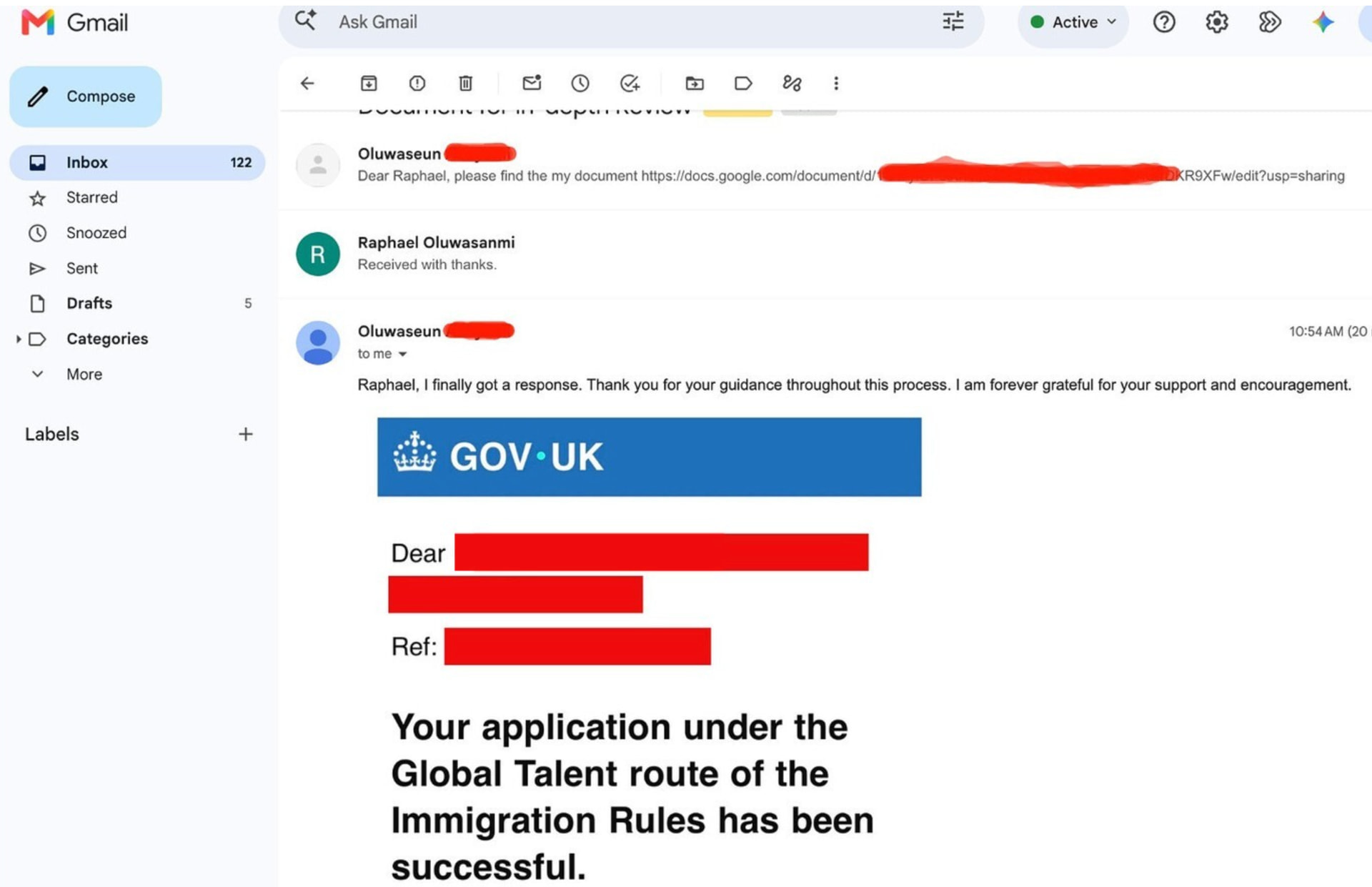
This was actually his second attempt. When he first came to me after a rejection, he gave me a list of evidence examples straight from the official guidelines and asked, “Which of these will give me the highest chance of passing?”
My advice to him and the core takeaway here, was simple: Stop trying to force your career into generic guidance examples, and focus on evidence that uniquely aligns with your personal narrative.
Think of it from an assessor’s perspective. The principle of scarcity and exclusivity in human behaviour causes people to naturally place greater respect, value, and appreciation on things that are uncommon. If many applicants submit the same types of evidence, such as standard GitHub repositories, generic press mentions, or common awards, assessors may encounter similar patterns repeatedly. From the feedbacks I see, I believe assessors see the same patterns over and over. While those evidence aren’t bad, relying on them dilutes your impact and make your application look like the rest.
Instead, let’s use the guidelines as a framework, not a rigid checklist. Present your real, standout achievements in a way that authentically reflects your actual career history and narrative.
To structure this, we used what I call the 3–7 Presentation Strategy
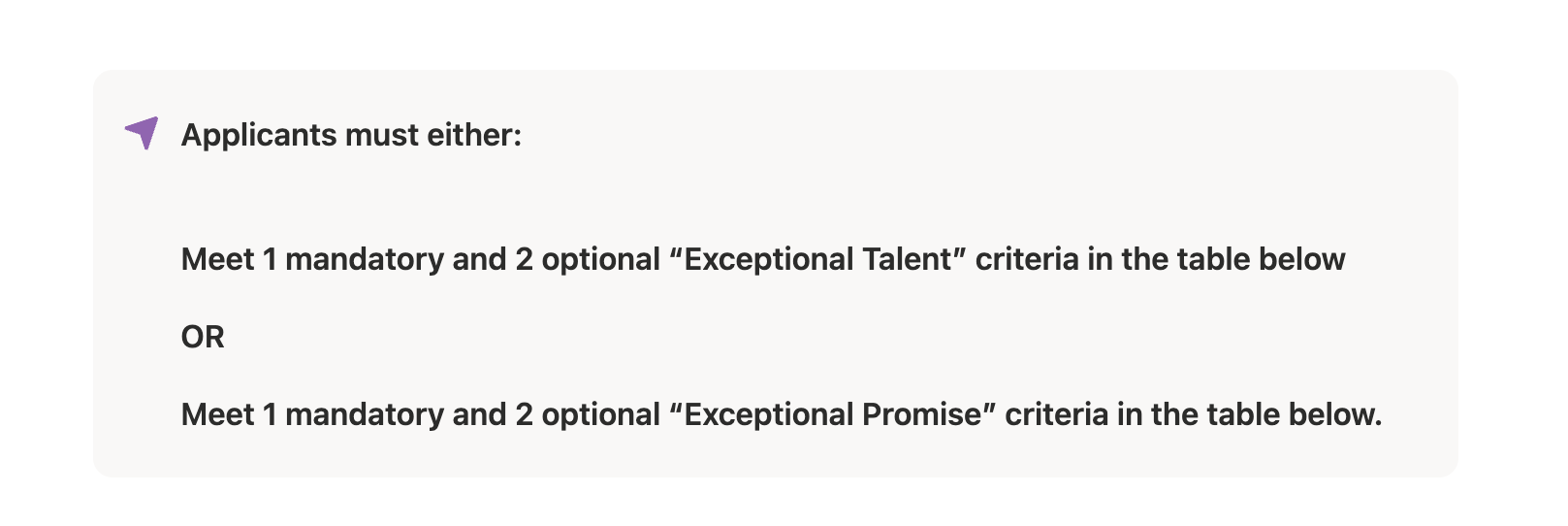
The Core 3 - Select your absolute strongest, most undeniable piece of evidence for each of your three chosen criteria (1 for Mandatory Criterion, 1 for Optional Criterion 1, and 1 for Optional Criterion 2). Lead with these and this is why, the guidance says, you must meet just 1 MC and 2 OCs
The Complementary 7 - Use the remaining seven documents to support, and even strengthen those main three anchors across your narrative. Whilst this strategy worked for me and has been helpful to some applicants I have supported, the assessors evaluate your profile holistically to decide if you truly fit the route.
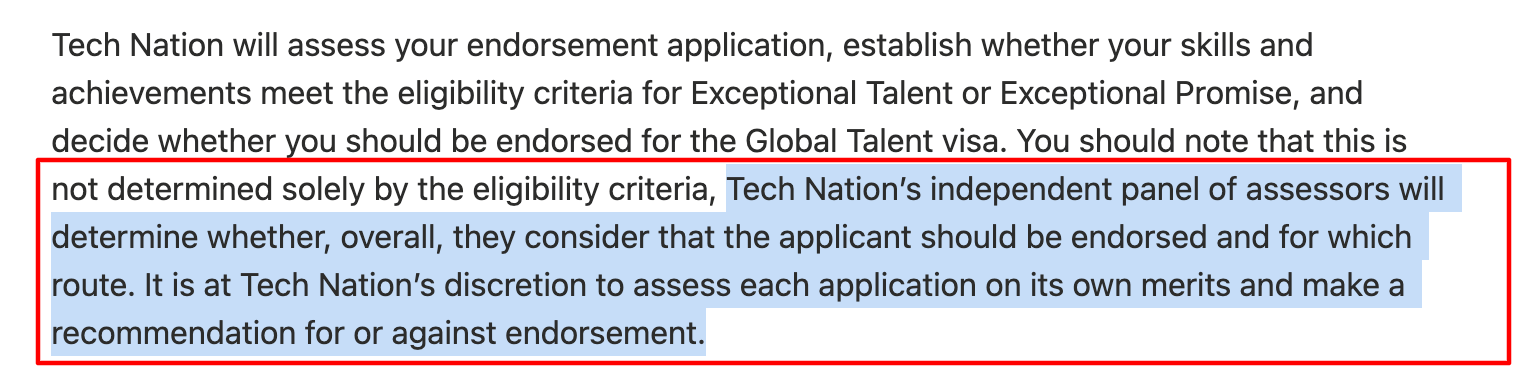
So, the official guidelines tell you what they look for, but unique, narrative-aligned evidence is how you convince them.
All the best.